Ghost in the Session: The Ethics and Possibilities of AI-Reconstructed Weather Report
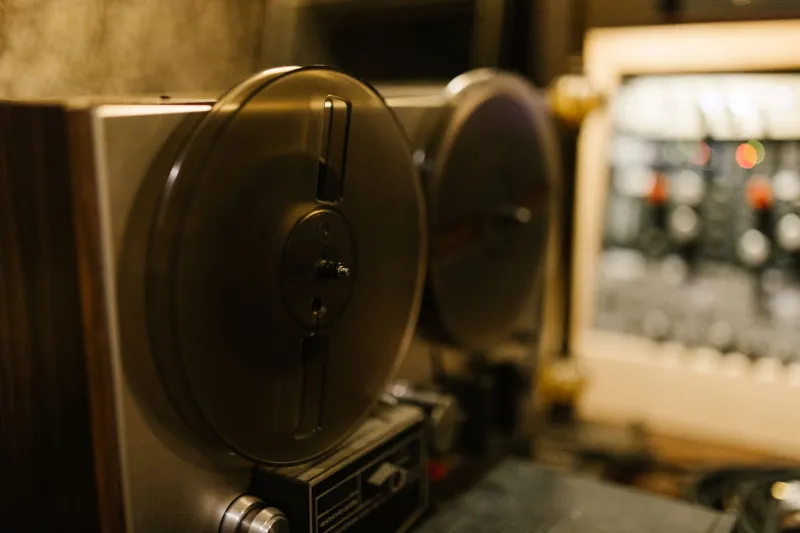
The tapes exist. Fragments of Weather Report sessions that never became albums, sketches that were abandoned mid-development, studio experiments that Zawinul and Shorter deemed insufficient or simply unnecessary to release. For decades, these materials have occupied a peculiar space in the band's legacy — acknowledged, occasionally discussed in liner notes and interviews, but largely inaccessible to the public. They are the negative space of one of jazz fusion's most consequential catalogs.
Now, for the first time, the technology exists to do something with that negative space. AI music tools have advanced to the point where a sufficiently trained model, fed the entirety of Weather Report's released catalog alongside whatever archival session material might be made available, could theoretically generate completions of unfinished pieces, reconstruct degraded recordings, or even produce entirely new material in the band's style. The question is no longer whether this is technically possible. The question is whether it is remotely justifiable.
What the Machines Can Actually Do
To engage seriously with this question, it is worth being precise about what contemporary AI music tools are and are not capable of. Systems like those developed by Suno, Udio, and various academic research groups can analyze large corpora of music and generate new material that reflects the statistical patterns of that corpus — harmonic vocabulary, rhythmic tendencies, textural density, production characteristics. More sophisticated tools can be used to separate and reconstruct audio stems from existing recordings, fill gaps in degraded tape, or extrapolate how a partial piece might have developed.
None of these tools understand music. They process relationships between sonic events with extraordinary efficiency, but they do not know why Zawinul chose a particular voicing, why Shorter's phrasing on a given passage curves the way it does, or what either musician intended by leaving a session unfinished. This distinction is not pedantic. It is the central issue.
A model trained on Weather Report's catalog would produce something that sounds, in many respects, like Weather Report. It would likely capture the band's characteristic harmonic ambiguity, their layering approach, the particular relationship between keyboard textures and horn lines. What it would not capture is the judgment — the accumulated aesthetic decision-making that determined which ideas were worth pursuing and which were correctly abandoned.
The Intentions of the Absent
Joe Zawinul died in 2007. Wayne Shorter passed in 2023. Neither is available to provide the consent that would make this conversation straightforward. This is not an unusual situation in the history of posthumous music releases — estates, archivists, and record labels have long navigated questions about what unreleased material to make available and in what form. The Beatles' use of AI-assisted audio separation to complete "Now and Then" in 2023 demonstrated that even the most iconic catalogs in popular music are not immune to this kind of intervention.
But there is a meaningful difference between using AI tools to isolate an existing vocal performance from a degraded recording — which is essentially a restoration act — and using those tools to generate new musical content that the original artists never created. The former recovers something that existed. The latter invents something that did not.
Zawinul, in particular, was famously controlling about the band's output. He was not a musician who left good work unreleased out of indifference. When sessions were shelved, there were reasons — aesthetic reasons, structural reasons, reasons rooted in his particular and exacting vision of what Weather Report was supposed to be. An AI system reconstructing those sessions would be, in a very real sense, overriding the most important creative decision Zawinul ever made about that material: the decision not to release it.
The Fan's Case and Its Limits
The argument for AI-assisted completion rests primarily on the interests of the audience. There are listeners — serious, devoted listeners — who would find genuine value in hearing what those sessions contained, even in reconstructed or speculative form. The jazz world has long accepted that posthumous releases, even imperfect ones, serve an educational and archival function. Coltrane's vault releases, Miles Davis's posthumous compilations, the ongoing excavation of Bill Evans's recorded legacy — all of these have enriched the historical record even when they complicated the narrative.
The difference, again, is fidelity to existing material versus generation of new content. A posthumous release presents what was actually recorded. An AI completion presents what an algorithm believes might have been recorded, dressed in the sonic clothing of the original artists. The distinction matters enormously when the artists in question were as deliberate and philosophically engaged as Zawinul and Shorter.
Shorter, whose compositional approach was rooted in a deeply personal symbolic language, would almost certainly have found the idea of algorithmic completion antithetical to everything he believed about music's relationship to consciousness and lived experience. His compositions were not sonic puzzles to be solved by pattern recognition. They were expressions of a specific interior life that cannot be replicated by any external system.
A Responsible Middle Path
This does not mean that AI tools have no legitimate role in the stewardship of Weather Report's legacy. Restoration — the use of audio separation and enhancement technology to improve the quality of existing recordings, make degraded tapes listenable, or prepare archival material for release — is a genuinely valuable application. The goal in these cases is transparency: making available what actually exists, in the best possible condition.
There is also a case to be made for clearly labeled, explicitly speculative projects — academic exercises or fan-driven experiments that use AI tools to explore what Weather Report's music might have become, presented openly as speculation rather than artifact. The critical requirement is honesty about what these projects are. They are not Weather Report. They are responses to Weather Report, informed by sophisticated pattern analysis but ultimately originating from outside the creative consciousness that defined the band.
The Question That Remains
What would Zawinul have made of all this? The man who spent decades insisting that the synthesizer was a legitimate jazz instrument, who embraced technology as a creative partner rather than a threat, might have been more open to the possibilities than his reputation for perfectionism suggests. Or he might have been the first to recognize that the difference between a tool that extends human creative agency and a tool that substitutes for it is precisely the distinction that matters.
Weather Report's music endures because it was made by specific human beings, in specific moments, under specific conditions of creative tension and collaborative will. That specificity is not a limitation. It is the source of the music's irreducible power. Whatever the machines can generate in the band's image, they cannot generate that.
The tapes exist. Perhaps that is enough.