Transmitted Underground: How Weather Report's Vault Material Became the Secret Curriculum of Modern Fusion
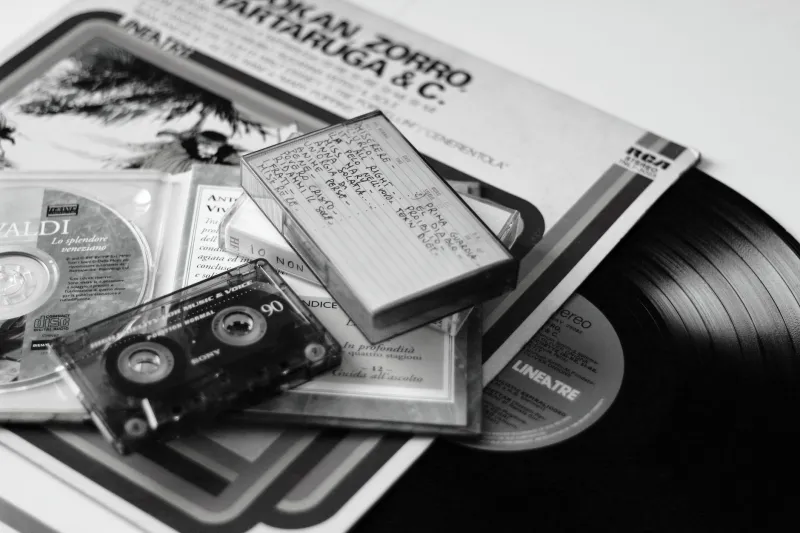
There is a particular kind of musical education that happens outside any institution, beyond any official syllabus, in the small hours of the morning with a degraded cassette copy of a live recording that someone's cousin dubbed from a tape that someone else had dubbed from the original reel. For a specific generation of jazz fusion musicians coming of age in the 1980s and 1990s, that tape was almost certainly, at some point, a Weather Report performance — one that Columbia Records never sanctioned, that Joe Zawinul never approved for release, and that existed purely because the music was too extraordinary for the people who witnessed it to keep entirely to themselves.
The story of how Weather Report's unofficial recordings shaped modern fusion is not a simple tale of piracy or nostalgia. It is, instead, an account of how a band's most unguarded creative moments became the most instructive documents in a genre's self-education — and how the very inaccessibility of that material amplified its mystique to near-mythological proportions.
The Tape Circuit and Its Invisible Curriculum
By the mid-1980s, a loose network of traders, collectors, and obsessives had assembled a substantial archive of Weather Report concert recordings. These circulated through mail-order tape exchanges, record fairs in cities like New York, Chicago, and Los Angeles, and eventually through early internet newsgroups and forums as the decade turned. The quality varied enormously — from audience recordings made with a concealed cassette deck to soundboard captures of startling fidelity — but the content was consistently revelatory.
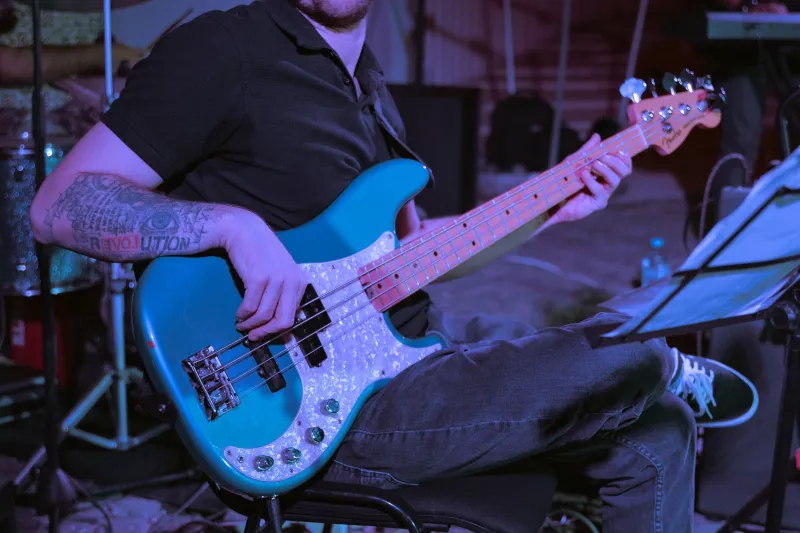
What these tapes preserved that studio albums could not was the band's improvisational nervous system. Official releases like Heavy Weather and Mr. Gone presented Weather Report in its most considered, architecturally refined form. The live material showed the band in a state of productive risk, navigating extended passages that bore only a structural resemblance to their recorded counterparts. Zawinul's synthesizer voicings sprawled into territories that no studio arrangement would accommodate. Wayne Shorter's soprano saxophone lines dissolved into pure abstraction and then reconstituted themselves with an almost casual authority. The rhythm section — in whatever configuration populated the stage on a given night — operated as a collective organism rather than a support structure.
For young musicians attempting to understand how fusion could be something more than technically impressive background music, these recordings were not supplementary material. They were primary texts.
The Mystique Problem
There is a compelling argument that the difficulty of obtaining these recordings made them more influential, not less. Scarcity creates reverence. When a musician spent months tracking down a particular 1976 concert recording and finally received a third-generation cassette copy with audible tape hiss and a brief dropout in the middle of the second set, that recording carried a weight that a readily available digital file simply cannot replicate. The effort invested in acquisition became part of the interpretive framework.
This dynamic produced something unusual in the sociology of musical influence: a generation of musicians who held the unofficial Weather Report catalog in higher esteem than listeners who had only encountered the band through conventional retail channels. The bootleg audience was self-selecting — these were people willing to do significant work to access the music — and their engagement with what they found was correspondingly intense.
Contemporary fusion artists who came of age in this environment speak about those recordings with a specificity that reveals just how deeply the material was absorbed. The particular way Zawinul would restructure a composition's harmonic center in real time, departing from the recorded version without apparent preparation and without losing the ensemble — that was something you could only learn from the live tapes. The studio records showed you the destination. The bootlegs showed you the navigation.
What the Unofficial Record Preserved
Several categories of material circulated through the tape network that carried particular instructional value. Extended concert versions of compositions from the band's mid-period — roughly 1973 through 1978 — documented an ensemble at the height of its collective intelligence, capable of sustaining coherent musical logic across performances that sometimes ran well past the length of an entire studio album side.
Equally significant were recordings that captured the band's personnel transitions. Weather Report cycled through an extraordinary number of musicians across its lifespan, and the unofficial recordings documented how the ensemble's character shifted with each change. A collector with access to recordings spanning multiple lineup configurations could trace, in granular detail, how the band's fundamental sound was more a function of compositional philosophy than personnel — a lesson with profound implications for any musician attempting to build an ensemble identity of their own.
There were also recordings that preserved compositions and improvisational frameworks that never appeared on any official release. These fragments — some clearly developed enough to have been considered for albums, others apparently spontaneous in-concert explorations — offered a glimpse into a creative process that Zawinul and Shorter were, by most accounts, reluctant to expose in any formal context. The band's public image was one of confident authority. The unofficial recordings occasionally showed something more interesting: a working method defined by genuine uncertainty and the willingness to fail productively in front of an audience.
The Downstream Effect
The influence of this underground curriculum is detectable throughout contemporary fusion in ways that are difficult to attribute to the official catalog alone. Certain harmonic approaches, structural strategies, and ensemble communication techniques that appear in the work of modern fusion artists — particularly those working in the post-Miles, post-Headhunters space that Weather Report helped define — trace more directly to the live and vault material than to anything on Mysterious Traveller or Tale Spinnin'.
This is not a claim that can be easily documented through conventional musicological analysis. Influence transmitted through unofficial channels rarely leaves a clean paper trail. What it leaves instead is a set of shared aesthetic assumptions among musicians who received their education through the same informal network — a common vocabulary that reveals itself most clearly when those musicians are in conversation with one another.
The digital era has complicated this dynamic significantly. Much of the material that once circulated exclusively through physical tape exchange is now accessible through YouTube uploads, archive.org repositories, and various streaming platforms of contested legality. The scarcity that once amplified the mystique has been substantially eroded. Whether this broader accessibility will produce a different kind of influence — wider in reach but perhaps shallower in depth — remains an open question.
The Lesson That Official Releases Could Not Teach
What the unofficial Weather Report catalog ultimately transmitted to the musicians who encountered it was something more fundamental than technique or theory. It transmitted a model of creative courage — a demonstration that a band operating at the highest level of technical accomplishment could still choose to approach each performance as an unresolved problem rather than a polished exhibition.
The studio records showed the world what Weather Report had decided. The bootlegs showed the world how they decided it. For a generation of fusion musicians trying to understand not just what the music sounded like but what it meant to make that kind of music — how to inhabit that level of ambition without surrendering to formula — the unofficial recordings were not a supplement to the official story. In many respects, they were the more essential document.
The ghost in the machine, it turns out, was never a specter at all. It was the most alive thing about the music.