What the Tape Reveals: Inside Weather Report's Shelved Sessions and the Creative Logic Behind Them
For a band as meticulously self-aware as Weather Report, every official release was, in a sense, an argument. Joe Zawinul and Wayne Shorter did not simply record music and release it; they curated an identity, album by album, shaping how the world would understand jazz fusion at its most sophisticated. Yet behind that carefully managed public face lay a body of work that never received that same editorial judgment—sessions that were recorded, assessed, and ultimately set aside for reasons that remain only partially understood.
The existence of this unreleased material is not, strictly speaking, a secret. Bootleg recordings have circulated among devoted collectors for years, and archival research has confirmed that Columbia Records retained substantial session tape from multiple eras of the band's history. What is less understood is what, precisely, these recordings tell us—not just about the music itself, but about the decisions that shaped one of the most consequential catalogs in American jazz.
The Architecture of a Decision
To understand why certain Weather Report material was shelved, it helps to understand how the band approached the studio. Unlike many jazz ensembles of their era, Weather Report did not typically enter a recording session with a fixed set of compositions ready for documentation. Instead, they operated in a more exploratory mode, particularly during the band's early years, allowing material to develop organically through extended improvisation and group interaction. This process generated far more recorded material than any single album could accommodate.
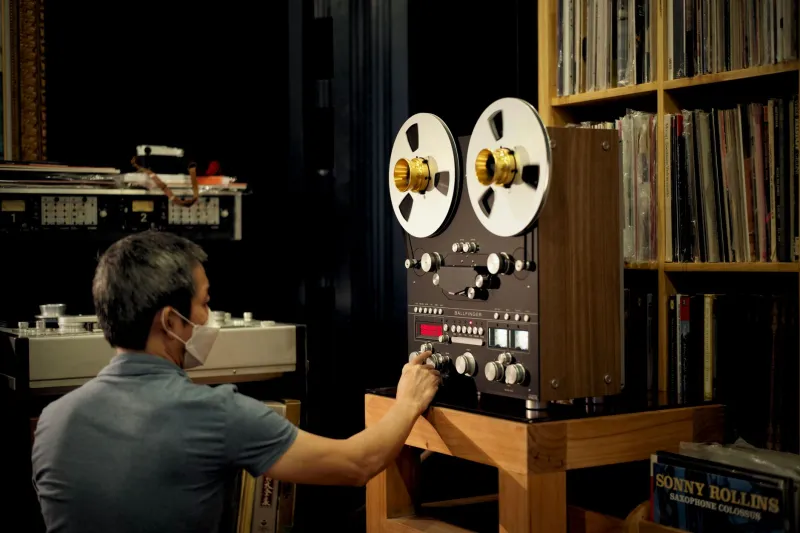
The consequence of that approach was a surplus—reels of tape containing performances that ranged from the fully realized to the genuinely unfinished. Some of what was shelved was experimental in the most literal sense: the band testing ideas that had not yet found their final form. Other material appears to have been set aside because it did not fit the conceptual architecture of a particular album, even when the performances themselves were of considerable quality.
In at least some documented cases, Zawinul's perfectionism played a decisive role. Those who worked closely with him have described an exacting standard that extended beyond technical execution to include matters of emotional tone, structural coherence, and what might be called the internal logic of a piece. A recording that did not fully satisfy those criteria, regardless of its surface appeal, was likely to remain in the vault.
The Early Years: Experiments That Didn't Make the Cut
The period spanning the band's formation in 1970 through the mid-decade recordings represents perhaps the richest source of unreleased material, and also the most revealing. During these years, Weather Report was actively constructing a new aesthetic vocabulary—one that drew on free jazz, European classical composition, electronic experimentation, and global rhythmic traditions simultaneously. The official albums from this period, including Mysterious Traveller and Tale Spinnin', offer a curated version of that process. The session recordings suggest something considerably messier and more exploratory.
Among the material known to exist from this era are extended improvisational pieces that share little with the more structured compositions that made it to vinyl. These recordings capture the band in a genuinely open-ended mode, following musical ideas without a predetermined destination. For listeners accustomed to the relative clarity of the official releases, some of this material can feel disorienting—and that, arguably, is precisely why it was shelved. Zawinul and Shorter understood that their audience, however adventurous, required a certain degree of orientation. The most extreme experiments remained private.
The Heavy Weather Paradox
The commercial breakthrough represented by Heavy Weather in 1977 introduced a new set of pressures that inevitably influenced what was recorded and what was released. As the band's profile rose and Columbia's expectations sharpened, the space for purely experimental material narrowed. Yet the session recordings from this period suggest that Zawinul and Shorter continued to pursue ideas that fell well outside the accessible sound of their biggest-selling album.
Among the more intriguing items known to exist are recordings that appear to represent transitional experiments between the Heavy Weather sound and the harder-edged direction the band would pursue on subsequent albums. These sessions illuminate a creative tension that the official releases only partially acknowledge: the band's desire to hold onto the commercial momentum of their breakthrough while simultaneously resisting the creative constraints that momentum implied.
The decision to shelve this material was, in this context, less about quality than about narrative. Weather Report was managing a public identity, and recordings that complicated or contradicted that identity—however interesting they might have been on their own terms—were unlikely to serve the band's strategic interests at that particular moment.
What Surfaces Teach Us About Subtext
In recent years, a small number of previously unreleased recordings have entered circulation through official archival releases and, in some cases, through the broader collector community. Each new piece of evidence complicates the received narrative about the band in productive ways.
Perhaps most significantly, these recordings challenge the assumption that Weather Report's evolution was a linear progression from one clearly defined phase to the next. The session material suggests a far more recursive process, in which ideas were introduced, abandoned, revisited, and transformed across multiple album cycles. A rhythmic approach that appears to emerge fully formed on one official release may, in fact, have roots in shelved sessions recorded years earlier.
This kind of archival evidence also reframes the band's internal dynamics. Zawinul's dominant role in shaping the band's direction is well documented, but the unreleased material hints at a more collaborative creative process than the official narrative sometimes implies. Shorter's compositional contributions, in particular, appear to have been more extensive and more varied than the final releases suggest—a finding that invites a reassessment of how credit and influence have been assigned in retrospective accounts of the band.
The Ongoing Question of Access
For all that the existing unreleased material reveals, the larger question remains unresolved: how much additional tape exists, and under what conditions might it become accessible? The Columbia Records archive is substantial, and the legal and logistical complexities surrounding its contents are considerable. Estates, licensing agreements, and the practical challenges of tape preservation all factor into what is, ultimately, a slow and uncertain process.
What is clear is that a comprehensive accounting of Weather Report's recorded legacy would substantially alter our understanding of the band—not by diminishing the official catalog, which remains among the most significant bodies of work in jazz fusion history, but by revealing the full scope of the creative labor that produced it. The albums we know were not inevitable. They were chosen, from a much larger field of possibilities, by musicians who understood that the act of editing was itself a form of composition.
The vault, in other words, is not merely a repository of what was left behind. It is the shadow archive of every decision Weather Report ever made.