When the Tape Rolled Live: How Weather Report's Concert Recordings Expose the Band's True Creative Engine
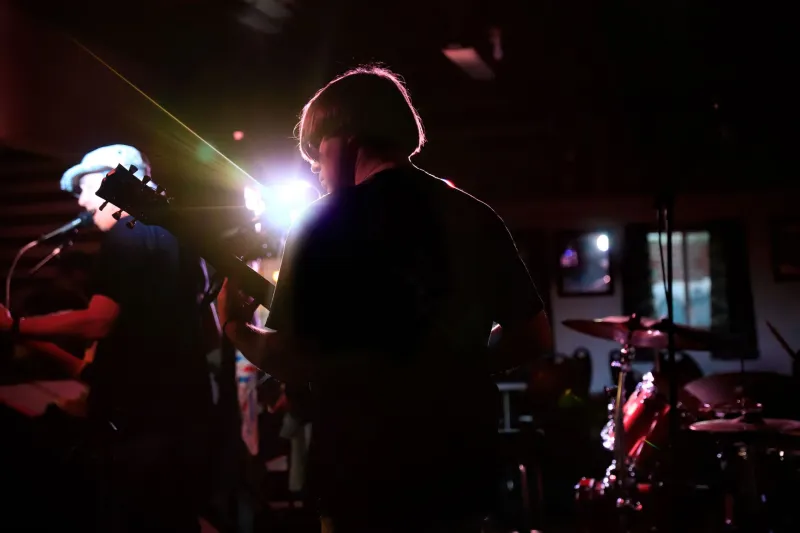
The studio album is, by its nature, an argument for a particular version of a piece of music. Every decision — the placement of a synthesizer texture, the duration of a rhythmic figure, the moment at which a melody yields to improvisation — represents a choice made final. For most bands, the live performance exists in subordinate relationship to this finality: it approximates the recorded version as closely as circumstances allow, accepting the studio artifact as the authoritative text. Weather Report operated under a fundamentally different assumption. For this band, the studio recording was a hypothesis. The live performance was where the hypothesis was tested, complicated, and frequently overturned.
This distinction is not merely philosophical. It has direct consequences for how listeners should approach the band's recorded legacy. The studio albums — Heavy Weather, Black Market, Mysterious Traveller, Sweetnighter — are essential documents. But they are incomplete ones. The live recordings, from the Montreux Jazz Festival appearances to the various concert tapes that have circulated among collectors for decades, tell a different and in some respects more revealing story about what Weather Report actually was.
The Montreux Evidence
The Montreux Jazz Festival recordings offer perhaps the most accessible entry point into Weather Report's live identity. The band appeared at Montreux multiple times across different lineup configurations, and the recordings from these performances are notable not only for their audio quality but for the degree to which they diverge from the studio versions of familiar compositions.
Listening to a Montreux performance of a track like Birdland alongside its Heavy Weather studio incarnation is instructive. The melodic skeleton is recognizable. The harmonic framework is intact. But the internal proportions have shifted dramatically. Sections that occupy a fixed duration on the album expand or contract according to the momentum of the performance. Soloists extend their contributions beyond what the studio arrangement would permit. Rhythmic patterns mutate mid-phrase in response to what other musicians are doing in real time. The composition is being used as a vehicle rather than a destination.
This is not unusual for jazz. But Weather Report's approach was distinguished by the degree to which even the composed, non-improvised elements of their music were subject to live transformation. It was not merely the solo sections that changed. The written material itself was treated as malleable — subject to compression, extension, reharmonization, and rhythmic displacement in ways that could make a familiar piece temporarily unrecognizable.
Zawinul's Live Synthesis
A significant portion of the sonic divergence between Weather Report's studio and live work can be attributed to Zawinul's approach to live synthesizer performance. In the studio, his keyboard textures were the product of deliberate construction — layered, edited, and refined until they achieved the precise effect he intended. On stage, those textures had to be generated in real time, which meant that they were necessarily different: more immediate, more responsive to the acoustic environment, more subject to the influence of what the other musicians were doing.
This real-time responsiveness created a feedback dynamic in live performance that the studio process could not replicate. When Zawinul adjusted his synthesizer voicing in response to a rhythmic shift from the drums, that adjustment immediately affected the harmonic context within which the other musicians were operating. The music was not merely being performed. It was being continuously renegotiated among the players, with each decision creating new conditions for the decisions that followed.
The sonic results were often more abrasive and more unpredictable than anything on the studio albums. The textural precision that characterized recordings like Tale Spinnin' gave way, in live contexts, to something rawer and more turbulent. Whether this represented an improvement or a loss depends on what one values in the music. What is not debatable is that it represented a genuine transformation — not a degradation of the studio material but an alternate realization of its underlying possibilities.
Shorter's Compositional Spontaneity
Wayne Shorter's role in the live/studio divergence is perhaps less immediately audible than Zawinul's but ultimately more profound. In the studio, Shorter's compositions arrived with a specificity of structure that gave the band's recordings their characteristic combination of discipline and mystery. Live, that specificity loosened in ways that revealed the generative logic beneath the composed surface.
Shortly after performances, Shorter has described his live approach as one of inhabiting rather than executing his compositions. The distinction is meaningful. Execution implies fidelity to a predetermined plan. Inhabitation implies a kind of ongoing discovery — finding new rooms in a structure one has already built. This is why live performances of Shorter compositions often feel simultaneously familiar and strange. The architecture is recognizable. The furniture has been rearranged.
This approach placed considerable demands on the musicians around him. To inhabit a Shorter composition in real time required understanding its underlying logic well enough to follow him into unexpected harmonic territory without losing the thread of the piece. The Weather Report rhythm sections that managed this most effectively — the Pastorius era is the obvious example — produced live performances of extraordinary coherence despite their surface unpredictability.
What the Collectors Have Always Known
Among serious Weather Report listeners, the primacy of the live recordings has long been an article of faith. The bootleg circuit that sustained collector interest in the band throughout the 1980s and 1990s was built on the understanding that the official studio catalog, for all its magnificence, did not tell the whole story. The circulating concert tapes from venues across the United States and Europe — many of them recorded under imperfect conditions, with variable audio fidelity — nevertheless conveyed something essential about the band's creative metabolism that the studio recordings could not.
This is not a criticism of the studio work. It is a recognition that Weather Report was, at its core, a live band that also made studio recordings — not the reverse. The compositions that Zawinul and Shorter brought to the recording studio were already, in some sense, pre-adapted for live performance. They were built to breathe, to expand, to accommodate the pressures of real-time collective decision-making. The studio versions captured one set of decisions. The live performances generated another.
The Case for Listening Differently
For listeners who have primarily experienced Weather Report through their studio catalog, the live recordings represent not a supplement but a corrective. They restore to the music the quality of contingency — the sense that what one is hearing is not inevitable but chosen, in the moment, from among multiple possible realizations. That quality is what makes improvised music compelling in a way that no amount of studio refinement can fully substitute.
Weather Report understood this. Their live performances were not approximations of their recordings. They were independent engagements with the same compositional material, governed by a different set of priorities and producing a different set of results. Both bodies of work are essential. But if forced to choose a single document that reveals what this band was truly capable of, the answer is not on any studio album. It is in the live recordings, where the music was still being made.