Borrowed Frequencies: How Today's Producers Are Mining Weather Report's Catalog for Gold

There is a peculiar irony embedded in the story of Weather Report's cultural legacy. The band that Joe Zawinul and Wayne Shorter assembled in 1970 spent its entire existence resisting categorization, refusing to be pinned down by genre convention or commercial expectation. And yet, decades after the group's dissolution, their recordings have become something of a sacred text for a generation of producers who traffic in exactly the kind of genre-blending audacity that Weather Report pioneered. Hip-hop architects, ambient composers, indie auteurs, and electronic producers have all, at various points, returned to the well — sometimes crediting the source, more often absorbing it quietly into their own sonic DNA.
The question worth asking is not simply whether this borrowing is happening, but why Weather Report's catalog proves so persistently malleable. What is it about recordings made between 1971 and 1986 that continues to offer raw material for music made in an entirely different technological and cultural moment?
The Drum Break as a Gateway
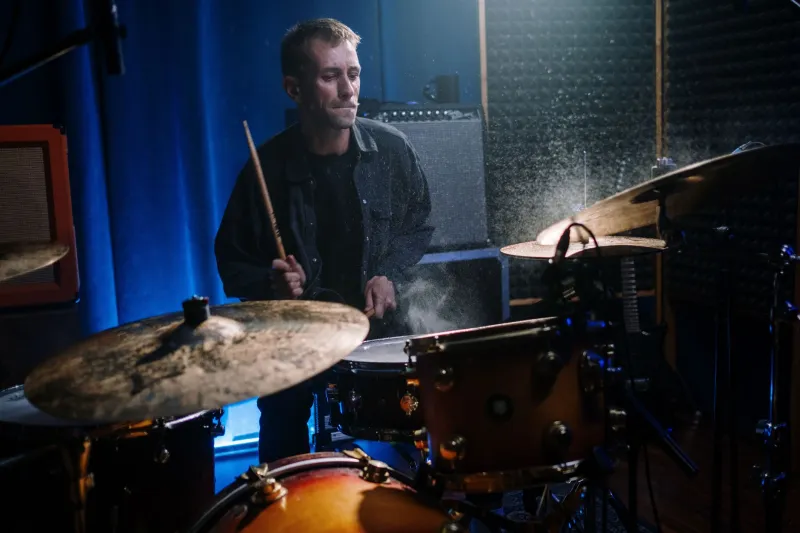
For producers working in the sample-based tradition, the entry point into Weather Report's catalog has frequently been rhythmic. Alex Acuña and Chester Thompson — two of the band's most celebrated percussionists — approached the drum kit as a conversational instrument rather than a timekeeper, layering polyrhythmic patterns with a looseness that sits in a peculiar sweet spot: technically precise enough to lock into a loop, yet organic enough to breathe beneath a vocal or a melody.
The opening percussion sequence on Birdland, from the 1977 album Heavy Weather, has been identified by producers in interviews and production breakdowns as a foundational reference point for understanding how jazz-derived rhythm can be adapted for contemporary contexts. The kick and snare placement defies the four-on-the-floor rigidity of dance music while simultaneously avoiding the unpredictability that might make a rhythm unusable in a modern production context. It occupies a middle ground that beatmakers find extraordinarily useful.
Jaco Pastorius's fretless bass work presents a related challenge and opportunity. His lines on tracks such as Teen Town and Havona operate simultaneously as melodic statements and rhythmic anchors — a dual function that, when isolated or referenced, gives a production an unusual sense of forward momentum. Several producers working in the neo-soul and jazz-rap spaces have described Pastorius's approach as a model for how bass can carry harmonic weight without crowding the midrange frequencies where vocals and synths compete for space.
Synthesizer Textures and the Architecture of Atmosphere
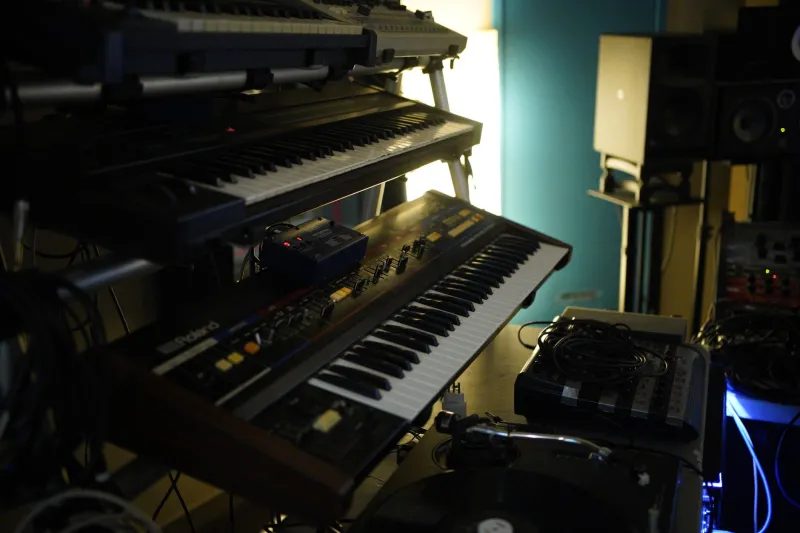
If the rhythmic elements of Weather Report's catalog represent one strand of influence on contemporary production, the synthesizer work of Joe Zawinul represents another — and arguably a more philosophically significant one. Zawinul's approach to the synthesizer was not ornamental. He treated electronic keyboards as world-building instruments, constructing tonal environments that could shift from oceanic ambience to jagged, percussive stabs within the same composition.
This architectural sensibility — the idea that a synthesizer is not merely a sound source but a spatial and emotional environment — has had a measurable influence on the producers who work at the intersection of electronic music and jazz. The ambient textures that Zawinul deployed on tracks like Mysterious Traveller and Palladium anticipate, with striking accuracy, the layered pad work that characterizes contemporary artists working in the lo-fi, ambient jazz, and atmospheric hip-hop spaces.
What makes these textures particularly useful for modern producers is their inherent incompleteness. Zawinul rarely resolved his synthesizer passages into neat harmonic conclusions. He preferred suspended voicings and unresolved tensions — a quality that makes his recordings surprisingly easy to loop and layer without creating harmonic conflicts with new melodic material placed on top.
The Sampling Lineage in Practice
Tracing direct sample usage in Weather Report's catalog requires some detective work, partly because the band's recordings were not always cleared with ease, and partly because many producers prefer to speak of influence rather than direct quotation. Nevertheless, documented examples and producer acknowledgments paint a clear picture of the catalog's reach.
Producers working within the broader landscape of progressive hip-hop and jazz rap — a tradition running from the Native Tongues era through to contemporary acts in the Stones Throw and Brainfeeder orbits — have repeatedly cited Mysterious Traveller (1974) and Tale Spinnin' (1975) as albums that reshaped their understanding of what a rhythm section could do. The way those records treat space — the deliberate silences, the willingness to let a groove breathe rather than fill every available frequency — directly informs the production aesthetic of artists who prioritize texture and mood over density.
Electronic producers working in more overtly club-oriented contexts have found Weather Report's catalog useful for different reasons. The band's willingness to incorporate non-Western rhythmic structures, particularly on albums recorded after Alejandro Acuña joined the group, offers a vocabulary of polyrhythm that sits comfortably alongside Afrobeat, cumbia, and other global rhythmic traditions that have become central to the contemporary dance music conversation in cities like New York, Chicago, and Los Angeles.
Why the Malleability Matters
The deeper reason Weather Report's catalog remains such a productive source for modern producers lies in the band's fundamental compositional philosophy. Zawinul and Shorter never wrote music that was self-contained in the conventional sense. Their compositions were frameworks — structures designed to be inhabited differently on each performance, leaving deliberate gaps and ambiguities that invited interpretation.
This quality translates directly into the sample-based context. A recording that was designed to accommodate improvisation, that leaves harmonic and rhythmic space for unexpected interventions, is a recording that naturally accommodates the kind of creative recontextualization that sampling demands. Weather Report's music was built to be extended, interrupted, and transformed. The producers who have recognized this are not violating the spirit of the work — they are, in a genuine sense, continuing it.
As the conversation around jazz fusion's influence on contemporary music continues to expand, Weather Report's position as an unacknowledged godparent to a remarkable range of modern sounds becomes increasingly difficult to overlook. The blueprint has been there all along. Producers have simply been reading it on their own terms.