Pressed in Darkness: The Underground World of Weather Report Bootleg Collectors and the Recordings That Built a Mythology
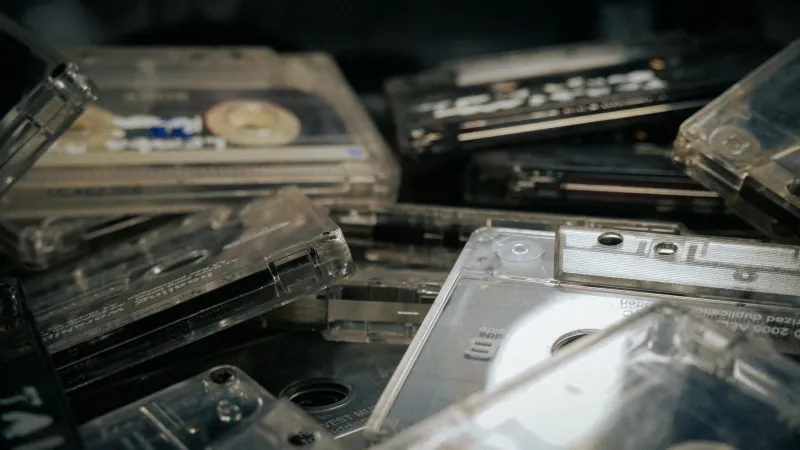
Somewhere between a concert hall and a cassette duplicator, Weather Report's live mythology was born. Long before streaming platforms democratized access to recorded music, a quiet and remarkably disciplined underground had already assembled what amounted to a parallel discography — one that existed entirely outside the reach of Columbia Records, outside the band's own archival instincts, and outside the awareness of most music journalists. These were the bootlegs: recordings captured on handheld microphones, reel-to-reel decks smuggled beneath overcoats, and the occasional sympathetic soundboard engineer willing to look the other way.
For a certain kind of listener, these recordings are not supplementary material. They are the primary text.
The Geography of the Underground
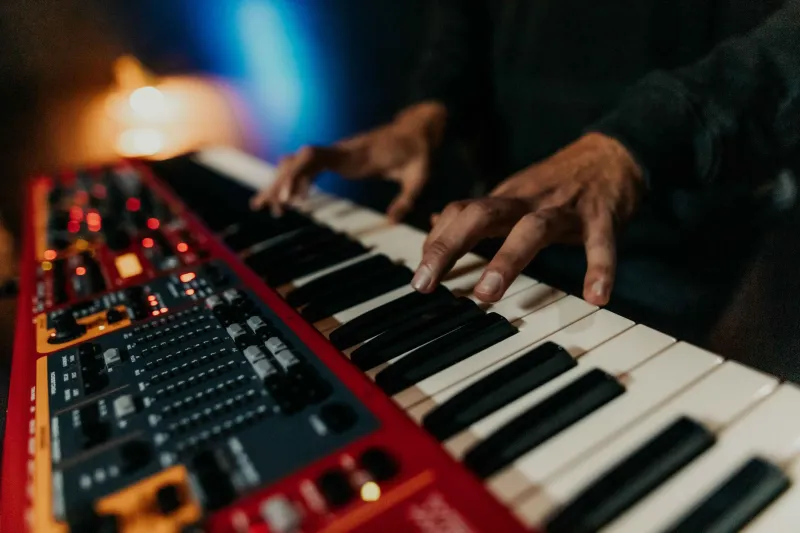
The bootleg economy around Weather Report never achieved the industrial scale that surrounded, say, the Grateful Dead or Bruce Springsteen. It was smaller, more selective, and considerably more esoteric — which is precisely what gave it its peculiar authority. Collectors tended to be musicians themselves, or musicologists, or the kind of obsessive listeners who could identify a specific Joe Zawinul synthesizer patch by ear and debate its provenance across message boards with scholarly intensity.
The geography of this underground was largely American in its origins but international in its reach. Trading networks centered in cities with robust jazz communities — New York, Chicago, San Francisco, Boston — served as distribution hubs. Tapes moved through the mail, through record fairs, and eventually through early internet file-sharing communities that predated Napster by nearly a decade. The currency was reciprocity: you shared what you had, and in return you received what you lacked.
What made Weather Report's bootleg economy distinctive was the specificity of the demand. Collectors were not simply seeking more music; they were seeking particular configurations of the band. A recording from the Mysterious Traveller tour carried different weight than one from the Heavy Weather era, and a performance featuring Alphonso Johnson on bass occupied a different tier of desirability than one with Jaco Pastorius — not because one was necessarily superior, but because each represented a distinct creative organism.
The Shows That Became Legend
Certain performances have achieved something approaching mythological status within this community. A 1974 concert recorded in Vienna, circulated for years on degraded third-generation cassette, is spoken of with the reverence typically reserved for lost manuscripts. Collectors who have heard it describe extended improvisational passages in which Zawinul and Wayne Shorter appear to be communicating through a harmonic language that has no direct equivalent on any studio recording from the period. Whether the recording's legendary status is entirely deserved or partly a product of its scarcity is a question the community debates with genuine intellectual honesty.
A 1976 performance from a festival in the American Northeast — the exact venue remains disputed among discographers — has been cited by multiple working musicians as a direct influence on their understanding of collective improvisation. The recording, which circulates in a version of reasonable fidelity, captures the band at a moment of apparent transition between compositional frameworks, and the tension of that transition is audible in real time. It is the kind of document that no studio album, by definition, could produce.
Perhaps most coveted is a series of soundboard recordings from a 1978 North American tour that have never been officially confirmed to exist. Secondhand accounts describe a run of shows in which the band performed material that was neither released nor substantially documented elsewhere — sketches, perhaps, for directions that were ultimately abandoned. The recordings themselves, if they exist, have not surfaced in any trading network in recent memory. Their absence has, if anything, intensified their allure.
What Official Releases Leave Out
The critical question these recordings raise is not merely one of availability but of interpretation. Weather Report's official catalog, substantial and carefully curated as it is, represents a series of deliberate choices — choices about what constituted a finished statement, what was ready for public consumption, what aligned with the band's self-image at any given moment. Live bootlegs operate outside those choices entirely.
This is not a trivial distinction. A band as compositionally self-conscious as Weather Report made decisions in the studio that were, by design, about control: control of texture, of dynamics, of the relationship between composition and improvisation. In a live setting, particularly in the 1970s when the band was performing for audiences ranging from jazz purists to rock fans to European festival crowds with entirely different expectations, those controls loosened considerably. What emerged was sometimes rawer, sometimes more exploratory, and occasionally more revealing of the band's actual creative instincts than anything that appeared on a Columbia LP.
Collectors and archivists are largely in agreement on this point. The bootlegs do not contradict the official catalog; they contextualize it. They show the working method beneath the finished surface, the improvisational logic that informed even the most composed-sounding studio passages.
The Ethics and the Future
The bootleg economy has always occupied an uncomfortable legal and ethical position, and the Weather Report community is not naive about this. Conversations among serious collectors frequently include acknowledgment that the band's surviving members and estates have legitimate interests in how this material circulates. The counterargument, advanced with equal seriousness, is that decades of institutional inaction have effectively ceded this material to the community that preserved it.
There are signs that the landscape may be shifting. The broader jazz archival movement — spurred by academic institutions, streaming platforms with catalog ambitions, and a generational reassessment of fusion's historical importance — has created conditions in which previously unavailable live material is being surfaced with some regularity. Whether Weather Report's most significant undocumented performances will ever receive official treatment remains genuinely uncertain.
What is not uncertain is the role these recordings have already played. Generations of musicians who came of age in the 1980s and 1990s, many of them trained in American conservatories that had only recently begun to take jazz fusion seriously as a subject of study, encountered Weather Report first through official albums and then, if they were fortunate enough to know the right people, through the bootleg network. The unofficial recordings shaped their understanding of the band in ways that no studio document could replicate.
The obsidian circle — that self-sustaining community of collectors who have kept these recordings alive through sheer devotion — has performed, whatever its legal ambiguities, a genuine act of cultural preservation. The recordings they have maintained are primary sources for any serious account of what Weather Report actually was, as opposed to what their official catalog suggests they chose to be. That distinction, in the end, may be the most important thing the bootlegs have to offer.