Scored in Someone Else's Language: How Contemporary Classical Composers Found a Structural Ally in Weather Report
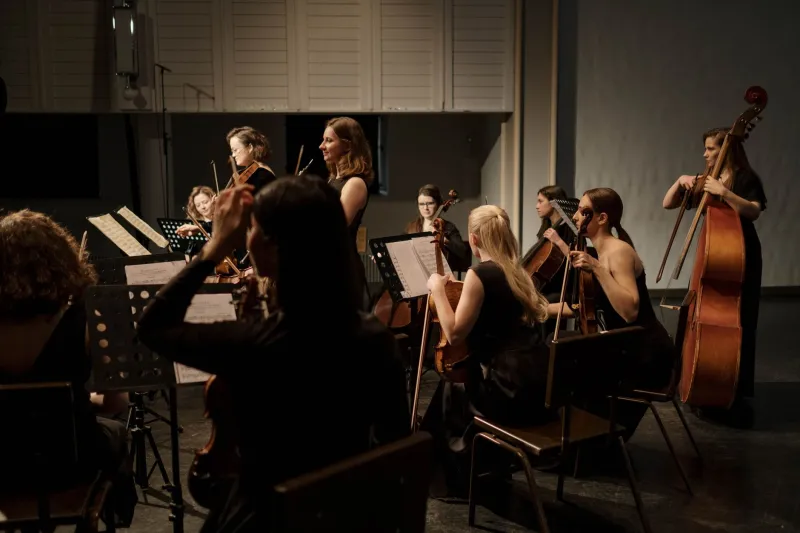
The concert programs rarely advertise the debt directly. A new chamber work premiering at a venue in New York or Chicago or Los Angeles will list its influences in the academic language of the liner notes — references to Messiaen, perhaps, or Ligeti, or the American minimalist tradition — and somewhere beneath that respectable genealogy, if you listen carefully enough, you will hear something else entirely. You will hear the harmonic suspension of a Joe Zawinul synthesizer voicing. You will hear the motivic compression that Wayne Shorter brought to melody. You will hear, in other words, Weather Report.
This is not coincidence, and it is not accidental. A generation of composers who came of age in the 1980s and 1990s — trained in American conservatories, exposed to both the European avant-garde and the full breadth of recorded American music — absorbed Weather Report as naturally as they absorbed any other formative influence. What is new, and what makes the current moment worth examining, is that these influences are now surfacing explicitly in concert music: in interpolated melodic fragments, in structural borrowings, and in the kind of textural thinking that the band pioneered and that the classical world is only now fully equipped to articulate.
The Orchestral Logic That Translated
To understand why Weather Report has proven so generative for composers working outside jazz, it helps to understand what distinguished the band's approach to sound construction from their contemporaries. Weather Report did not think in soloists and accompaniment. They thought in layers — simultaneous, interdependent layers of texture that were compositionally determined rather than improvisationally arrived at, even when improvisation was actively occurring within them. This is, in structural terms, closer to orchestral writing than to conventional jazz arrangement.
Zawinul's synthesizer work, in particular, operated on principles that composers trained in spectral music or electroacoustic composition immediately recognize. His interest in the internal resonance of chords, in the way specific voicings produce acoustic phenomena that exceed the sum of their component notes, anticipates preoccupations that would not fully enter classical discourse until the 1990s. Shorter's melodic writing, meanwhile, has a motivic economy and a tolerance for harmonic ambiguity that places it in productive dialogue with the post-Webern tradition without ever sounding remotely like European serialism.
These qualities made Weather Report's catalog, particularly the recordings from 1972 through 1977, unusually legible to composers whose primary training was in notated music. The band was doing something that could be analyzed with the tools of classical theory, even if it had arrived at those practices through entirely different means.
Chamber Music and the Fusion Inheritance
The most direct evidence of this influence appears in chamber music, where the reduced forces and extended duration of individual works create space for the kind of textural development that Weather Report specialized in. Several composers associated with what critics have loosely termed the post-minimalist American school have acknowledged, in interviews and program notes, drawing on specific Weather Report recordings as compositional models.
The appeal, as these composers describe it, is not primarily harmonic or melodic but architectural. Weather Report understood how to sustain tension across long durations without relying on the narrative conventions of either jazz or classical music — without the developmental logic of the sonata form, without the blues-derived resolution patterns of jazz, without the rhythmic inevitability of groove-based music. They created music that existed in a kind of perpetual present tense, and that quality has proven extraordinarily useful to composers interested in exploring similar temporal territory through notated means.
The influence also manifests in more specific, traceable ways. Certain harmonic structures from Mysterious Traveller have appeared, transformed but recognizable, in recent string quartet writing. The rhythmic layering of Black Market has informed the polyrhythmic frameworks of several percussion ensemble pieces that have received significant performances at American new music festivals over the past decade. These are not cases of straightforward quotation; they are cases of deep structural absorption, the kind of influence that leaves fingerprints rather than signatures.
The Minimalist Connection
Perhaps the most unexpected dimension of Weather Report's classical afterlife is their relationship to minimalism — a movement with which they have no obvious genealogical connection but with which they share a set of compositional preoccupations that become clearer with historical distance. Both Weather Report and the American minimalists of the 1970s were interested in process, in the way musical structures evolve through incremental transformation rather than dramatic contrast. Both were interested in the relationship between repetition and change. Both were, in their different ways, suspicious of the European classical tradition's hierarchies of melody, harmony, and rhythm.
Composers who have worked at the intersection of minimalism and jazz — a territory that has expanded considerably in American new music over the past two decades — frequently cite Weather Report as a bridge figure: a body of work that demonstrates how the processual thinking of minimalism could be inhabited by the improvisational energy of jazz without either tradition being compromised. This is a significant claim, and it is one that the recordings largely support upon careful listening.
What the Classical World Is Still Learning
The relationship between Weather Report and contemporary classical composition is not yet fully articulated, partly because the classical world has been slow to develop the critical vocabulary needed to discuss jazz fusion as a serious compositional practice rather than a commercial genre. Academic music theory has only recently begun to produce rigorous analytical work on Weather Report's compositional methods, and much of that work remains confined to specialist journals with limited reach beyond university music departments.
What the broader classical community is beginning to understand, however, is that Weather Report's orchestral thinking was not incidental to their music but central to it. The band was not a jazz group that occasionally sounded orchestral; they were, in a meaningful sense, an orchestra that had internalized jazz's relationship to time and spontaneity. That understanding, once established, opens the catalog to a different kind of listening — and a different kind of creative engagement.
The composers who are currently drawing on Weather Report's work are not engaged in nostalgia or genre tourism. They are engaged in the serious business of identifying compositional resources that remain underexploited, and they have found those resources in a body of music that the classical establishment largely ignored when it was being made. The correction, however belated, is worth noting.