Rejected by the Mainstream, Claimed by the Devoted: The Paradox of Weather Report's Enduring Fandom

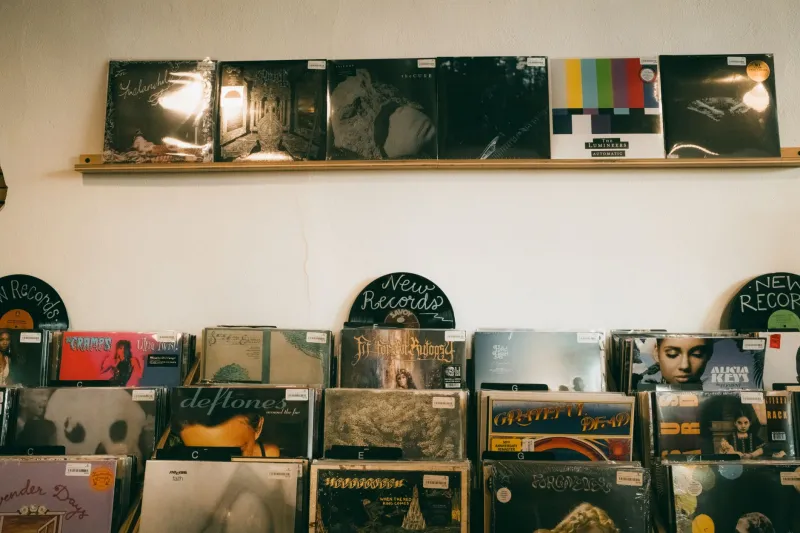
Photo by Photo by Matthew Kalapuch on Unsplash on Unsplash
There is a particular kind of devotion that forms not despite resistance but because of it. Fans of Weather Report understand this intimately. For more than two decades, the band that Josef Zawinul and Wayne Shorter built was alternately celebrated, dismissed, misunderstood, and occasionally ridiculed by the critical establishment. Yet today, in an era when algorithmic recommendation engines shape the contours of musical taste more decisively than any magazine review ever could, Weather Report's fanbase remains not just intact but quietly expanding. The question worth asking is not simply why the band survived critical indifference. The more interesting question is whether that indifference was, in some paradoxical sense, the engine of their longevity.
A Band That Never Auditioned for Approval
From their 1971 self-titled debut, Weather Report operated on a principle that was radical in its simplicity: make the music the conversation requires, not the music the market requests. This was not a posture adopted for commercial effect. Zawinul was constitutionally incapable of strategic compromise when it came to sound, and Shorter's compositional instincts ran so deep that commercial calculation would have felt like a foreign language. The result was a catalog that sprawled across tonal textures, rhythmic philosophies, and structural approaches in ways that made coherent genre classification essentially impossible.
For critics trained to locate music within established frameworks, this presented a genuine problem. Jazz purists argued the band had abandoned the form's harmonic seriousness. Rock audiences found the music too cerebral. Pop radio had no viable entry point. Weather Report existed in a commercial no-man's-land, and the critical establishment, which tends to reward legibility, largely responded with ambivalence or outright hostility.
What the critics missed — what they almost always miss in cases like this — is that the listeners were paying a different kind of attention.
The Listener Who Feels Seen
There is a demographic that jazz orthodoxy has never quite known what to do with: the progressive music enthusiast who finds straight-ahead jazz too restrictive, classical music too removed from rhythm, and rock too blunt in its emotional vocabulary. These listeners exist in significant numbers across the United States, often isolated in cities and towns where their tastes find little communal reinforcement. For many of them, Weather Report was not simply a discovery. It was a recognition.
The band's refusal to simplify — their insistence on polyrhythmic density, on harmonic ambiguity, on compositions that rewarded repeated listening rather than immediate comprehension — communicated something to these listeners that went beyond musical preference. It communicated a value system. Weather Report seemed to be saying, without any explicit declaration, that the audience was capable of meeting the music on its own terms. That assumption of listener intelligence is rarer than it should be, and when people encounter it, they tend to respond with loyalty that outlasts trends.
Speak to longtime Weather Report devotees and the same narrative recurs with striking consistency. Many describe the experience of first hearing the band as disorienting, even alienating — and then finding themselves unable to stop returning. The music asked something of them, and the act of rising to that demand became part of their identity as listeners.
Critical Rejection as Cultural Inoculation
There is a sociological dimension to this phenomenon that deserves serious consideration. When a cultural object is dismissed by mainstream arbiters of taste, it undergoes a kind of inoculation. The fans who remain are those for whom the music's value was never contingent on external validation. Their investment becomes, if anything, deeper precisely because it is not reinforced by the surrounding culture.
Weather Report occupied this position for much of their career. The critical dismissal — sometimes condescending, sometimes simply indifferent — functioned as a filter. Those who stayed did so because the music itself had made an argument that no review could undermine. And the community that formed around that shared conviction developed the characteristics that define genuinely durable fandoms: a culture of close listening, an appetite for deep historical knowledge, and a resistance to the kind of taste-cycling that drives algorithmic popularity metrics.
In the contemporary landscape, where Spotify playlist placement and TikTok virality determine which artists achieve mass recognition, this model of fandom looks almost antiquarian. But it is worth asking whether it is also more sustainable. Algorithmic popularity is, by design, temporary. The artists who trend are replaced by the next trend. Weather Report, having never trended, was never subject to that replacement logic.
The Catalog as Commitment Device
Part of what sustains Weather Report's fanbase is the sheer scope of the catalog. With sixteen studio albums spanning wildly different sonic territories — from the austere experimentalism of Mysterious Traveller to the propulsive funk architecture of Black Market to the crystalline accessibility of Heavy Weather — the band offers listeners a career-length journey rather than a single definitive statement.
This breadth functions as what behavioral economists might call a commitment device. Each album discovered deepens the investment in the next. A listener who enters through Birdland and follows the thread back to Sweetnighter or forward to Procession has made a substantial intellectual and emotional investment. That investment generates attachment that casual listening never produces.
The catalog also rewards the kind of comparative listening that serious enthusiasts practice. The evolution of Zawinul's relationship with synthesizer technology, the shifting role of the bass chair across different lineup eras, the gradual transformation of Shorter's compositional voice — these are subjects that sustain years of engaged inquiry. Weather Report did not release a body of work. They released a curriculum.
What Authenticity Actually Means
The word authenticity is deployed so casually in music writing that it has nearly lost its analytical utility. But in Weather Report's case, it retains genuine meaning. The band's authenticity was not a brand position. It was a consequence of creative priorities so firmly held that commercial considerations simply could not gain purchase.
In an era when artists routinely submit to algorithmic optimization — adjusting song length for streaming metrics, calibrating emotional content for playlist categorization — Weather Report's model of uncompromised creative integrity looks not just admirable but instructive. The band demonstrated, across a career of sustained critical indifference, that the audience capable of the deepest engagement is not the largest audience. It is the audience that finds in the music something that no other music provides.
That audience, once formed, does not leave. Decades after the band's dissolution, new listeners continue to find their way to Weather Report through the recommendations of devoted fans, through music education programs, through the influence the band exerted on artists those listeners already love. The critical establishment's failure to secure Weather Report's mainstream legacy may have inadvertently secured something more durable: a community of listeners for whom the music remains genuinely irreplaceable.
The most divisive band in jazz fusion built the most loyal fanbase in jazz not in spite of that division, but in some meaningful sense, because of it. The lesson for any era dominated by the pursuit of algorithmic approval is both obvious and uncomfortable: the audiences worth building are not always the ones most easily counted.