Circuit Memory: How Weather Report's Studio Innovations Became the Blueprint for Modern Electronic Production
There is a particular kind of influence that operates beneath the surface of popular culture — not the kind that announces itself through obvious homage or direct quotation, but the kind that reshapes the underlying architecture of how creative work gets made. Weather Report's legacy in electronic music production belongs squarely to that second category. The band did not merely inspire subsequent generations of musicians to adopt a certain aesthetic. They fundamentally altered the procedural logic of how layered, technology-driven music is constructed.
To understand the depth of that contribution, it is necessary to move past the familiar narrative of Weather Report as jazz innovators and examine them instead as studio engineers operating at the edge of what was technically possible in their era — and occasionally beyond it.
The Modular Mindset Before Modularity Was Mainstream
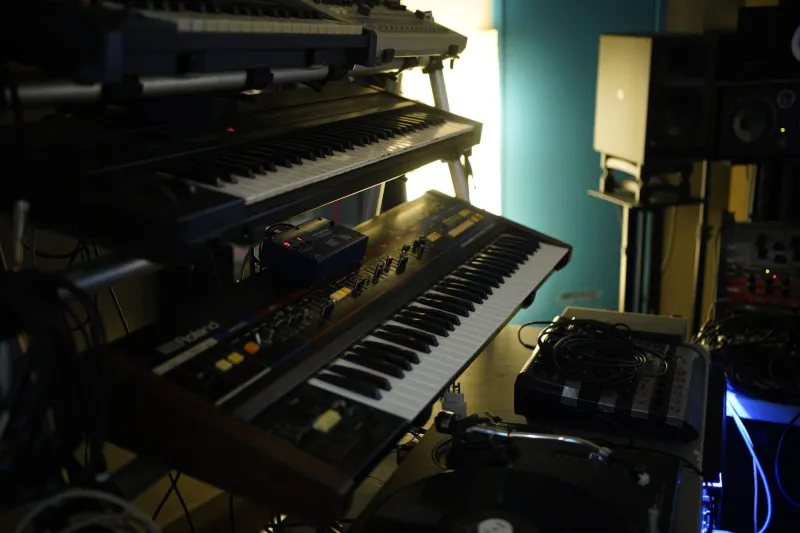
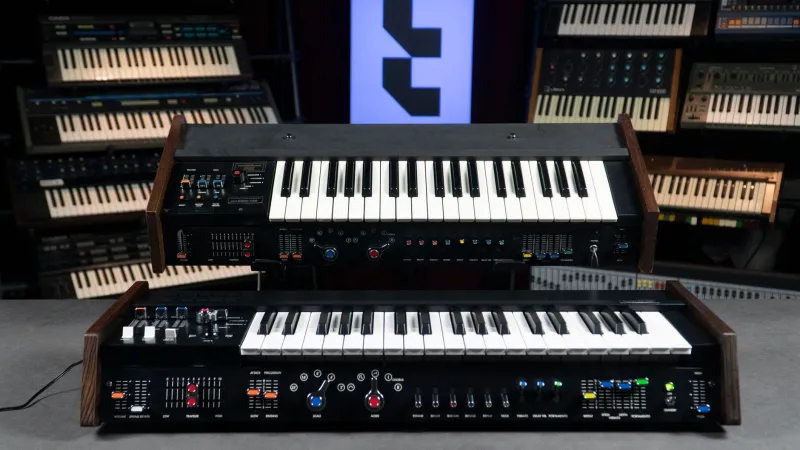
Joe Zawinul's approach to the synthesizer was, by the standards of the early 1970s, radically unconventional. Where many of his contemporaries treated synthesizers as melodic substitutes for conventional instruments, Zawinul conceived of them as environmental generators — devices capable of producing not just notes but entire sonic atmospheres that could shift, breathe, and respond in something approaching real time.
This philosophy anticipated what contemporary electronic producers now call "modular thinking": the practice of treating a production not as a fixed arrangement of parts but as a dynamic system of interacting elements. Producers working in genres as divergent as ambient, IDM, and contemporary jazz fusion have noted that Zawinul's layering methodology — stacking synthesizer textures at different rhythmic and harmonic densities — maps almost precisely onto the signal-routing logic of modern modular synthesis environments.
The landmark 1977 album Heavy Weather demonstrated this approach in commercially accessible terms, but the more technically instructive work had already been done on records like Mysterious Traveller (1974) and Tale Spinnin' (1975), where Zawinul built sonic environments that shifted beneath the listener without ever fully resolving into predictable patterns. That quality of controlled instability — of music that sounds improvised yet is architecturally coherent — is something producers today spend considerable effort trying to replicate through automation, randomization algorithms, and generative sequencing.
Polyrhythm as Production Technique
Perhaps no aspect of Weather Report's methodology has proven more durably influential than its treatment of rhythm — specifically, the band's practice of layering percussion elements that operated in simultaneous, non-aligned metric cycles.
Alex Acuña and Manolo Badrena's contributions to the Heavy Weather sessions are frequently cited in academic discussions of jazz percussion, but their significance to electronic production is less commonly acknowledged. The practice of constructing drum arrangements from multiple independent rhythmic streams — each with its own internal logic, intersecting with the others at irregular intervals — is now a defining characteristic of contemporary genres including Afrobeat-influenced electronic music, polyrhythmic techno, and the broader category sometimes described as "global bass" music.
Producers working in these areas have increasingly pointed to Weather Report recordings as primary reference material. The band's rhythm section did not merely play complex patterns; it engineered rhythmic environments in which complexity emerged from the interaction of relatively simple components. That emergent quality is precisely what modern producers attempt to achieve through step-sequencer programming, euclidean rhythm generators, and probabilistic drum machines.
Real-Time Manipulation and the Performance of Production
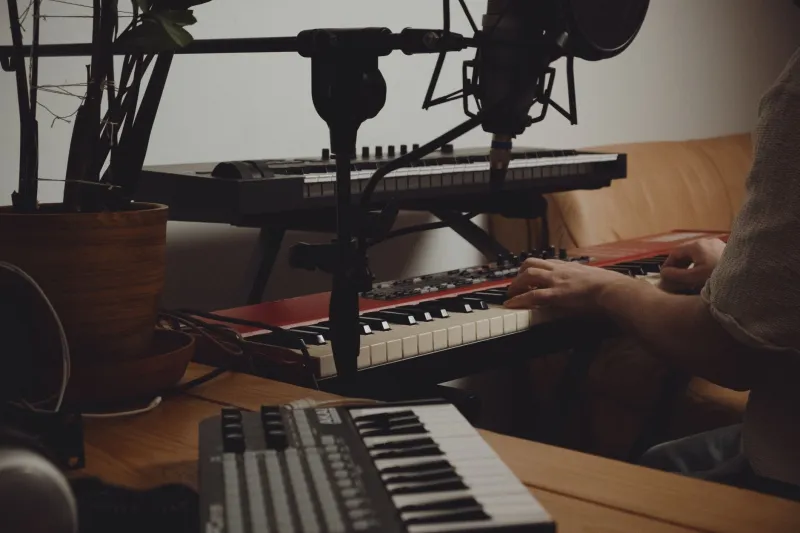
One of the more underappreciated dimensions of Weather Report's technical legacy concerns the band's approach to live performance as a form of production. Zawinul was known to manipulate synthesizer parameters — filter cutoffs, oscillator tunings, modulation depths — in real time during performances, treating the instrument not as a fixed sound source but as a continuously variable medium.
This practice prefigures what contemporary electronic performance culture calls "live PA" — the mode of performance in which a producer manipulates a production system in real time rather than triggering pre-recorded sequences. The aesthetic and technical values that define successful live PA performance today (responsiveness, unpredictability within structure, the audible presence of human decision-making within an electronic framework) are values that Zawinul was embodying on stage decades before the terminology existed to describe them.
Sound designers working in film and interactive media have made similar observations. The technique of using live instrumental performance to modulate synthesizer behavior — routing acoustic signals through voltage-controlled processors to create hybrid timbres — was central to Weather Report's sonic identity and has since become a standard tool in professional sound design workflows.
The Spatial Architecture of the Mix
Weather Report's recordings are distinguished not only by their harmonic and rhythmic complexity but by their spatial organization — the way individual elements are positioned within the stereo field and at different apparent distances from the listener. This was not accidental. The band worked closely with engineers and producers to construct mixes in which the sense of acoustic space was itself a compositional element.
Contemporary electronic producers, particularly those working in immersive audio formats such as Dolby Atmos and binaural mixing, have identified Weather Report's spatial approach as an early model for what is now called "3D mixing" — the practice of treating the full three-dimensional acoustic environment as a compositional canvas rather than simply distributing elements across a left-right stereo field.
The reverb treatments on recordings from the Mysterious Traveller and Black Market (1976) periods, in particular, demonstrate an understanding of acoustic space as a dynamic variable — one that could be used to suggest scale, movement, and narrative progression within a musical piece. These are exactly the qualities that spatial audio engineers work to achieve today using convolution reverb, binaural processing, and object-based audio tools.
A Living Curriculum
What makes Weather Report's technical legacy particularly significant is its breadth. The band's innovations did not cluster around a single technique or a single genre application. They extended across rhythm, harmony, timbre, spatial design, and the fundamental philosophy of how a music production system should be organized and operated.
For contemporary producers seeking to understand why certain approaches to electronic music feel richer, more spatially coherent, or rhythmically more compelling than others, the Weather Report catalog functions as something close to a living curriculum. The answers to questions that producers are still actively working through — how to balance structure and spontaneity, how to layer complex textures without losing clarity, how to make electronic sounds feel physically present — are embedded in recordings that the band made between 1971 and 1986.
The ghost in the machine, it turns out, has been there all along. It simply required the development of new listening tools — and new production contexts — to make its presence fully audible.