The Reunion That Never Ends: How Weather Report's Spirit Lives in Today's Jazz Collaborations
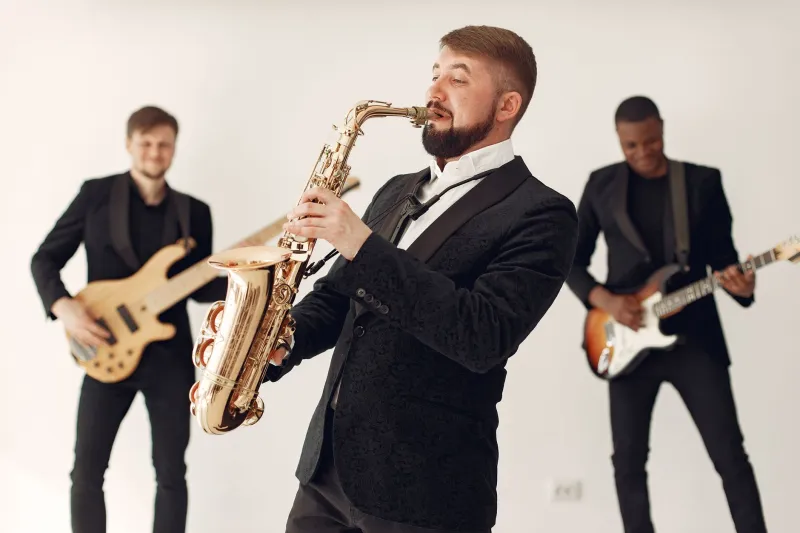
In a rehearsal space in Brooklyn on a Tuesday evening, four musicians are working through the harmonic architecture of a piece that does not appear on any set list. They have not been hired for a gig. There is no audience, no recording contract, and no occasion beyond the occasion of the music itself. What they are doing, collectively, is attempting to internalize a way of thinking about ensemble interaction that they associate with a band that officially ceased to exist in 1986. The band is Weather Report. The practice is, in various forms, happening in cities across the United States every week.
This is not nostalgia. The musicians involved in these sessions—many of them in their thirties and forties, with active careers in jazz, fusion, and the spaces between—are not primarily interested in recreating the past. They are interested in extracting from Weather Report's approach a set of principles that they believe remain generative, applicable, and in many respects unrealized. The band's catalog, in their view, is not a monument to be admired from a respectful distance but a working document, dense with unresolved questions and unexplored possibilities.
What Gets Transmitted
The musicians who have studied Weather Report most seriously tend to describe the experience in terms that are more analytical than reverential. They speak about the band's approach to ensemble democracy—the idea, formalized by Joe Zawinul and Wayne Shorter in the early years of the group, that no single instrument should dominate the texture, and that the most interesting musical events tend to emerge from the interactions between parts rather than from any individual's contribution in isolation.
This principle, which sounds straightforward in the abstract, is extraordinarily difficult to execute in practice. It requires each musician in an ensemble to listen with a quality of attention that suppresses the natural impulse toward self-assertion, while simultaneously contributing material that is interesting and responsive enough to generate meaningful interaction. Weather Report, at its best, achieved this balance consistently—and the recordings document it with a clarity that makes them invaluable pedagogical material for musicians attempting to develop the same capacity.
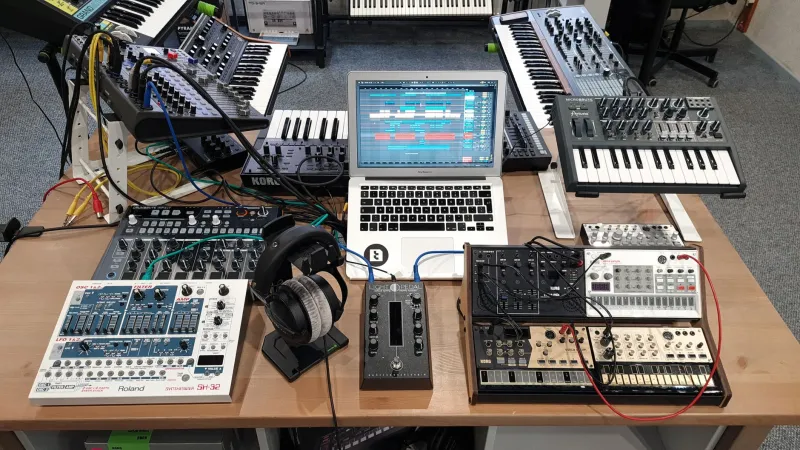
Keyboardists who have spent serious time with the catalog frequently cite Zawinul's voicing choices as a primary focus of study. His ability to create harmonic density without harmonic clutter—to stack intervals in ways that implied multiple tonalities simultaneously without collapsing into incoherence—is considered by many working musicians to be among the most sophisticated achievements in the history of the instrument as applied to ensemble contexts.
The Festival Circuit as Living Laboratory
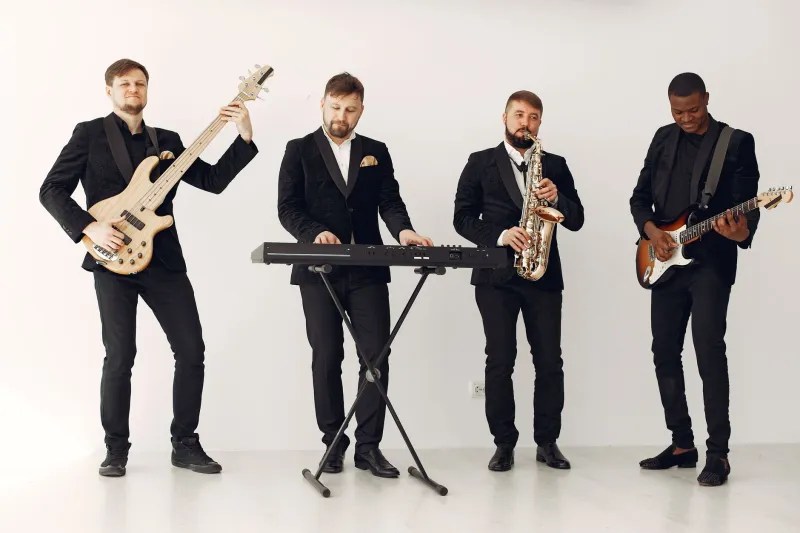
Beyond the rehearsal room, the most visible arena in which the Weather Report legacy is actively contested and extended is the American jazz festival circuit. Several festivals—most notably those with programming philosophies oriented toward fusion and post-bop improvisation—have made a practice of convening what might be called Weather Report-adjacent ensembles: groups assembled specifically to explore the band's repertoire, or to perform original music that engages directly with its aesthetic.
These events are consistently among the most discussed performances at the festivals where they occur, and the discussions they generate are revealing. Audiences who attend expecting a tribute experience are frequently surprised by the degree to which the performers depart from the source material—extending compositions, restructuring arrangements, and inserting original passages that engage with the Weather Report vocabulary without reproducing it. This is, in fact, consistent with the band's own practice: Weather Report was famously resistant to fixed arrangements, and live performances of their compositions often bore only a structural resemblance to the recorded versions.
The musicians who organize and participate in these performances tend to be explicit about their intentions. They are not attempting to replicate what Weather Report did. They are attempting to do what Weather Report did—which is to say, they are attempting to build ensembles in which individual virtuosity serves collective expression, in which electronic and acoustic elements coexist without hierarchy, and in which the groove is sophisticated enough to support genuine improvisational complexity.
The Pedagogical Underground
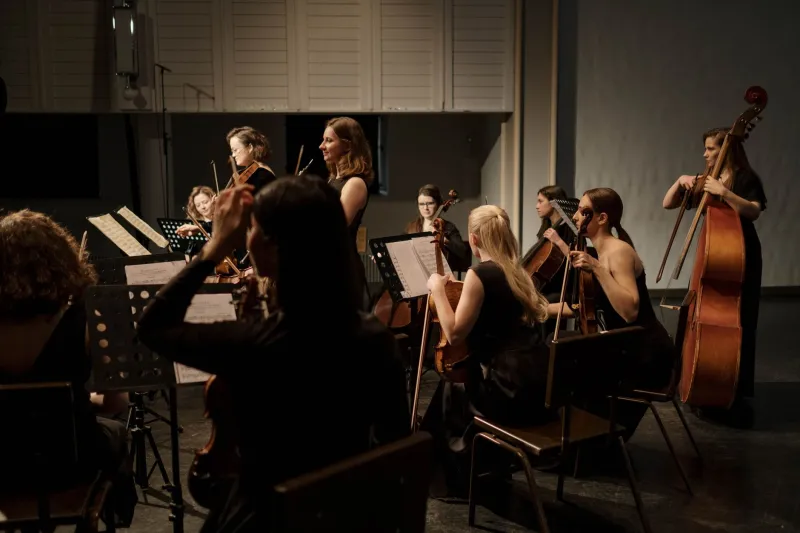
Perhaps the most significant and least visible dimension of the Weather Report legacy in contemporary jazz is the pedagogical one. The band's influence on music education—particularly at the conservatory and university level—has been substantial, though it is rarely discussed in those terms. Instructors who came of age during the band's active years, or who discovered the catalog during their own formative training, have systematically incorporated Weather Report's compositional and improvisational approaches into their curricula.
The effects of this transmission are now audible in the work of musicians who may never have consciously studied the band. Students trained by instructors who internalized Weather Report's ensemble philosophy tend to exhibit certain characteristic tendencies: a preference for textural complexity over melodic simplicity, a heightened sensitivity to the rhythmic implications of harmonic choices, and an orientation toward collective improvisation that prioritizes interaction over individual display.
This is the nature of genuine musical lineage. It does not require direct exposure to the source; it requires only that the principles embedded in that source be transmitted with sufficient clarity and conviction to survive the journey through multiple generations of practitioners. Weather Report's principles—democratic ensemble interaction, harmonic sophistication, rhythmic complexity, the integration of electronic and acoustic sound—are robust enough to have made that journey intact.
Carrying the Frequency Forward
The musicians who gather in Brooklyn rehearsal spaces, who convene on festival stages, and who teach in conservatories from Boston to Los Angeles are not, individually, attempting to keep Weather Report alive. They are attempting to keep alive the questions that Weather Report asked—questions about what jazz can be, about how improvisation and composition can coexist, about what happens when musicians from different traditions are placed in genuine dialogue with one another.
Those questions were not answered definitively by Weather Report, and the band would likely have resisted any suggestion that they had been. The music was always more interested in the asking than the answering. That orientation—restless, curious, fundamentally dissatisfied with the already-known—is perhaps the most important thing that has been transmitted. The reunion, in this sense, never ends. It is ongoing, distributed across dozens of ensembles and hundreds of musicians, and it sounds different every night.