Walls That Listened: The Studios, Engineers, and Physical Spaces Behind Weather Report's Sound
A recording studio is not a passive vessel. Its dimensions determine how sound behaves before a single microphone is positioned. Its equipment imposes a character — the particular saturation of an analog console, the frequency response of a specific compressor, the way a vintage reverb unit trails off — that becomes inseparable from the music recorded through it. The engineers who operate these spaces bring decades of accumulated judgment about where to place a microphone, when to push a fader, how to translate a musician's spoken description of a desired sound into an electronic reality.
All of this is invisible on the finished record. But it is never absent. And for a band as sonically ambitious as Weather Report, the specific environments where recordings were made were not incidental to the music. They were constitutive of it.
Bolic Sound and the California Crucible
Several of Weather Report's most significant recordings were made in Los Angeles, a city whose studio culture in the 1970s occupied a peculiar position in American music — simultaneously the capital of polished commercial production and a haven for musicians seeking to push against those commercial norms. The tension between those two impulses was productive, and it left its mark on the records made there.
Bolic Sound, the Inglewood studio founded by Ike Turner, was among the facilities that shaped the band's middle-period work. The room had a warmth and a physical presence that distinguished it from the more clinical environments favored by pop productions of the era. Engineers who worked there developed an intuitive understanding of how to capture live ensemble playing in a way that preserved the spatial relationships between instruments — the sense that musicians were sharing a room rather than assembled from separately recorded tracks.
This matters enormously for understanding why Weather Report records from this period feel the way they do. The band's improvisational chemistry — the way Zawinul's keyboards and Shorter's saxophone respond to each other in real time — is not simply a product of the musicians' sensitivity to each other. It is also a product of the room's acoustics and the engineer's decisions about how to capture those acoustics. Change the room, and you change the conversation.
The Engineer as Invisible Collaborator
The role of the recording engineer in the Weather Report story has been consistently underexamined, in part because engineers are professionally trained to be self-effacing. Their names appear in liner notes, but their contributions are rarely described with the specificity they deserve.
What distinguished the engineers who worked most successfully with Weather Report was an ability to operate in conditions of deliberate uncertainty. Zawinul in particular was known for sessions that began without fixed arrangements — explorations that might yield usable material or might not, that might last minutes or hours, that required the engineer to make real-time decisions about what to capture and how. This demanded a different kind of skill than the precise execution required by more conventionally structured sessions.
The engineers who thrived in this environment developed what might be called a curatorial instinct — an ability to recognize, in the moment, which sounds and interactions were worth preserving and which were productive detours. That instinct shaped the records as surely as the musicians' improvisational choices. A slightly different engineer, with a slightly different set of aesthetic priorities, would have produced a different album from the same raw material.
Analog Environments and the Physics of Warmth
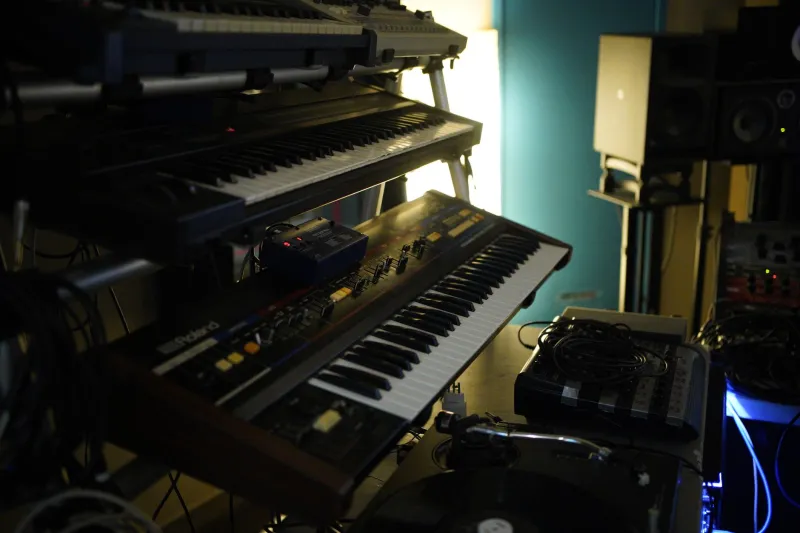
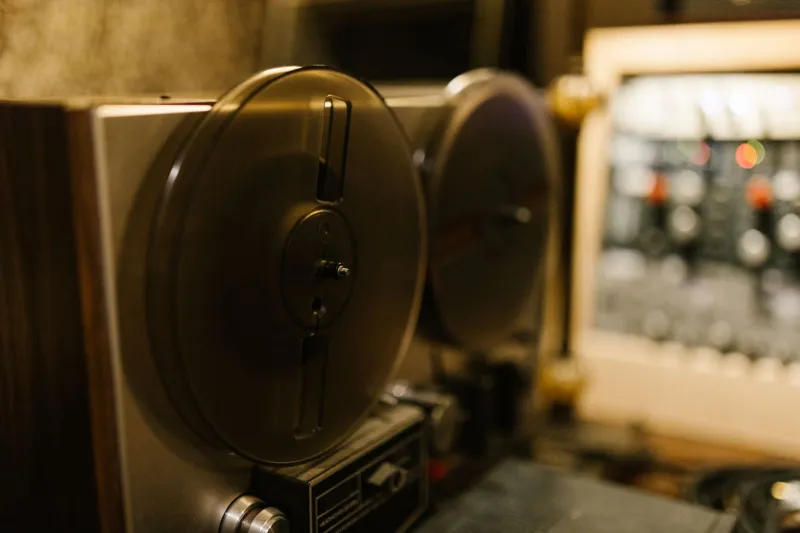
The equipment available in the studios where Weather Report recorded was analog throughout the band's most celebrated period — tape machines, tube-driven consoles, outboard gear with the particular sonic signatures that digital technology has spent decades trying to replicate and has not yet fully succeeded in capturing.
The significance of this equipment is not merely technical. Analog recording systems respond to sound in ways that are physically continuous — they capture the full complexity of a waveform without the quantization artifacts that digital systems introduce. More importantly for an ensemble like Weather Report, they respond to dynamics in ways that feel organic: tape saturation at high levels produces a compression that adds density without sacrificing warmth, in a manner that later became the defining characteristic of what audiophiles and producers now call the 'analog sound.'
When Zawinul's synthesizers were recorded through these systems, something happened that cannot be fully explained by signal flow analysis. The electronic precision of the synthesizer was softened, given a physical presence, embedded in the acoustic world of the room in a way that made the electronic and the acoustic feel continuous rather than contrasting. This is one reason why Weather Report's synthesizer-heavy records do not feel cold or clinical in the way that much electronic music of the era does. The room and the tape were humanizing the machines.
The Bedroom Production Question
The shift toward home and bedroom recording over the past two decades has democratized music production in ways that are genuinely valuable. Musicians who would previously have required institutional funding to access professional recording facilities can now produce work of technical sophistication on affordable equipment. The barriers to entry have collapsed, and the creative landscape has expanded accordingly.
But something has also been lost, and the Weather Report archive makes that loss concrete. The specific character of a room — the way sound moves through a particular space, the reflections and absorptions that give a recording its sense of physical place — cannot be replicated by software, however sophisticated. The institutional knowledge carried by experienced engineers, accumulated across hundreds of sessions in specific physical environments, cannot be downloaded. And the productive pressure of an expensive room on the clock — the discipline that comes from knowing that creative indulgence has a direct financial cost — has its own shaping effect on music that is difficult to reproduce in a home studio.
None of this is an argument against bedroom production. It is an argument for honesty about what different recording environments make possible and what they foreclose. The Weather Report records that endure do so in part because they were made in rooms that had opinions — rooms with acoustic personalities, staffed by engineers with strong aesthetic instincts, equipped with machines that responded to sound in ways that left a physical trace on the finished work.
What the Room Gave the Music
To listen to Heavy Weather or Black Market or Mysterious Traveller through this lens is to hear layers that purely musical analysis misses. The spatial depth of those recordings — the sense that instruments occupy distinct positions in three-dimensional space — is not an accident of mixing. It is the product of specific rooms, specific microphone placements, specific console decisions made by specific engineers in specific moments.
The studios where Weather Report recorded were, in the most meaningful sense, collaborators. They shaped what was possible, constrained what was attempted, and left their signatures on the finished work. Recovering that history is not mere archivism. It is an essential part of understanding how the music was made — and what it would take to make music of comparable depth today.