Lost in the Algorithm: Why Weather Report's Catalog Deserves Better Than What Streaming Has Given It
There is a version of the streaming era's promise that sounds genuinely utopian: every recording ever made, available instantly, anywhere. For listeners interested in exploring the deep catalog of a band like Weather Report, that promise should have been transformative. The reality is considerably more complicated. Streaming has not so much democratized access to Weather Report's discography as it has made that discography simultaneously present and inaccessible — technically retrievable but stripped of the context, sequencing, and curatorial intelligence that makes a catalog meaningful rather than merely available.
This is not a Weather Report-specific problem. Progressive and jazz-adjacent music broadly has fared poorly in the streaming economy, which is optimized for passive consumption and algorithmic recommendation rather than the kind of active, sequential, historically informed listening that complex catalogs demand. But Weather Report's case is particularly instructive — and particularly frustrating — because the band's output is so precisely the kind of music that rewards careful, contextual engagement and suffers most severely from its absence.
The Fragmentation Problem
Begin with the most basic structural issue: Weather Report's discography, as it exists across major streaming platforms, is a fragmented and inconsistent archive. Albums appear in multiple versions — original releases, reissues with bonus tracks, compilations that rearrange material without explanation — with no clear indication for the new listener of which version is authoritative or how the available options relate to one another.
The 1977 album Heavy Weather, the band's commercial high-water mark and the most algorithmically visible entry point for new listeners, is available on Spotify, Apple Music, and Tidal in at least two distinct versions, with bonus tracks appearing on some editions that do not appear on others, and no consistent liner note content to explain the differences. For a listener encountering the album for the first time, the choice between versions is invisible — the platform makes no distinction — and the significance of that choice is entirely obscured.
The problem compounds as listeners move deeper into the catalog. Albums from the band's most creatively adventurous period — Mysterious Traveller, Tale Spinnin', Black Market — are present on major platforms but exist in a recommendation vacuum. The algorithmic infrastructure that might guide a listener from Heavy Weather to Black Market to Mysterious Traveller in a coherent developmental sequence simply does not function for catalog jazz. The algorithm reads a listener's interest in Heavy Weather and surfaces other commercially successful jazz fusion records from the same era, not the deeper Weather Report catalog that would most reward the listener's developing interest.
What the Algorithm Cannot See
The streaming recommendation model is built on behavioral data — what listeners who played Track A subsequently played — and on genre and mood tagging that reflects popular consumption patterns rather than musicological relationships. Weather Report's catalog sits awkwardly across multiple genre tags (jazz, jazz fusion, contemporary jazz, smooth jazz — a category the band would have found insulting), none of which accurately captures the band's range or guides listeners toward the most relevant adjacent material.
More fundamentally, the streaming model has no mechanism for communicating the developmental logic of a catalog. Weather Report's discography is not a collection of interchangeable albums — it is a fifteen-year argument about what jazz could be, conducted across a sequence of recordings that only make full sense in relation to one another. The transition from the atmospheric abstraction of the 1971 debut to the funk-inflected density of Sweetnighter to the compositional complexity of the mid-period albums to the commercial accessibility of Heavy Weather is a story. Streaming platforms do not tell stories. They serve individual tracks to passive listeners and call the transaction complete.
The Reissue Quality Problem
Beyond algorithmic issues lies a more concrete problem: the audio quality and completeness of available streams is inconsistent in ways that matter for this particular catalog. Weather Report's studio recordings were produced with exceptional attention to sonic detail — Zawinul's synthesizer work and the band's use of studio space as a compositional element demand high-fidelity playback to be fully appreciated. The compressed audio streams available on standard Spotify or Apple Music tiers flatten precisely the textural nuance that makes these recordings distinctive.
Tidal's lossless tier improves matters considerably for subscribers willing to seek it out, but the platform's catalog coverage has its own gaps, and the interface imposes the same contextual vacuum as its competitors. The Columbia/Legacy reissues that represent the most authoritative versions of many Weather Report albums are available in high-resolution digital formats through services like Qobuz and HDtracks, but these platforms remain niche destinations that new listeners are unlikely to encounter through ordinary discovery pathways.
A Practical Guide for the Serious Listener
Given these structural limitations, how should a listener who is genuinely committed to exploring Weather Report's catalog proceed? The following recommendations are offered not as a workaround for streaming's failures but as a framework for the kind of intentional listening that this music demands.
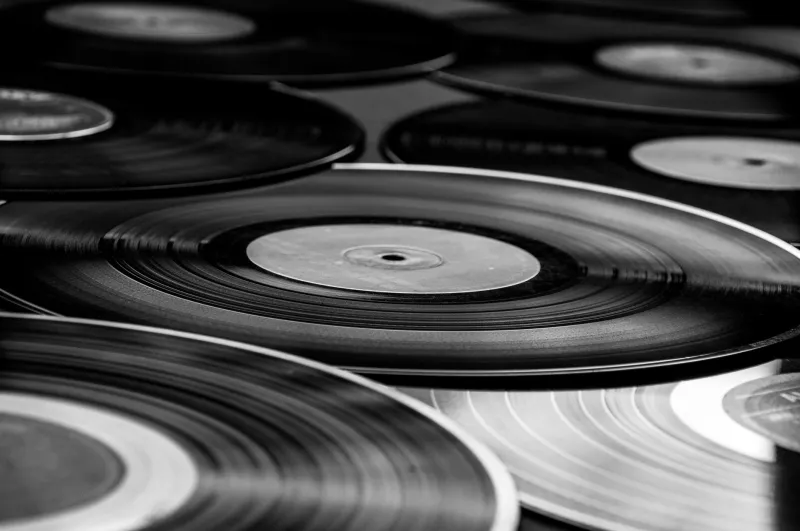
Start with physical media for the core catalog. The Columbia/Legacy reissues of Heavy Weather, Black Market, Mysterious Traveller, Tale Spinnin', and Sweetnighter remain available through used record dealers and online marketplaces at reasonable prices, and they include liner notes and session information that provide essential context. The investment is modest relative to the listening value.
Use streaming for breadth, not depth. Platforms like Spotify are useful for initial reconnaissance — for determining which albums and tracks merit deeper investigation — but they are poor vehicles for the sustained, attentive listening that Weather Report rewards. Treat streaming as a preview service and physical or high-resolution digital formats as the primary listening medium.
Seek out the academic and critical literature. Brian Glasser's In a Silent Way: A Portrait of Joe Zawinul and the liner notes to the Forecast: Tomorrow box set provide historical and contextual information that no streaming platform attempts to supply. These resources transform catalog exploration from a passive exercise into an active one.
Build your own sequence. The developmental logic of Weather Report's discography is not discoverable through algorithmic recommendation. A listener who wants to understand the band's arc should construct a deliberate listening sequence — the 1971 debut, then I Sing the Body Electric, then Sweetnighter, through the mid-period albums to Heavy Weather and beyond — and follow it with the same commitment they would bring to reading a long-form work of nonfiction.
The Larger Lesson
Weather Report's catalog is a test case for a broader failure of the streaming economy: the assumption that access and understanding are equivalent. Making a recording available on a platform is not the same as making it discoverable, comprehensible, or contextually meaningful. For music that rewards — and in some respects requires — active, informed, sequential engagement, the streaming model's passive architecture is not a neutral delivery mechanism. It is an obstacle.
The band spent fifteen years building a body of work that repays exactly the kind of careful attention that streaming is structurally designed to discourage. Honoring that work means being willing to go beyond the platform — to seek out physical media, critical literature, and deliberate listening practices that streaming cannot provide. The music is worth the effort. The algorithm will not tell you that, which is precisely why it needs to be said.