The Art of Holding Back: How Weather Report Turned Silence Into Their Most Powerful Instrument
There is a particular kind of courage required to leave space on a recording. In the early 1970s, when jazz fusion was still staking its claim as a legitimate idiom, the prevailing instinct among its practitioners was abundance — more notes, more density, more velocity. The genre's competitive energy pushed musicians toward maximalism almost by default. Against that backdrop, Weather Report made a choice that was, in retrospect, nothing short of audacious: they learned when to stop playing.
This was not passivity. It was not a failure of invention. It was, in fact, among the most sophisticated compositional decisions the band would ever make, and it is one that continues to inform how serious musicians think about arrangement, texture, and the architecture of a recorded performance.
Negative Space as Compositional Language
The concept of negative space — the deliberate absence of content that gives shape and meaning to what surrounds it — is well understood in the visual arts. A sculptor knows that the air around a form is as much a part of the work as the marble itself. Weather Report, guided by the collaborative intelligence of Joe Zawinul and Wayne Shorter, arrived at a parallel understanding for music.
Zawinul, whose background encompassed both classical training and years spent absorbing the rhythmic and harmonic logic of Miles Davis's most exploratory ensembles, understood intuitively that a note gains its full expressive weight only in relation to the silence that precedes and follows it. Shorter, whose compositional sensibility had always leaned toward the oblique and the unresolved, brought a complementary instinct: the willingness to leave questions open, to resist the satisfying cadence, to let a phrase dissolve into air rather than land cleanly on a defined conclusion.
Together, these two tendencies produced something that the broader fusion world was largely unprepared to recognize as a strategy. Many listeners and critics, conditioned by the kinetic energy of contemporaries like Mahavishnu Orchestra or Return to Forever, initially interpreted Weather Report's quieter passages as transitional filler — brief reprieves before the next storm of activity. Closer listening reveals something far more deliberate.
The Evidence in the Grooves
Consider Mysterious Traveller (1974), an album that remains among the band's most structurally adventurous. The title track opens not with a declaration but with a kind of sonic question mark — sparse, hovering, resistant to rhythmic grounding. The silence embedded in those early bars is not empty; it is charged with anticipation. The arrangement withholds resolution in a way that creates genuine suspense, drawing the listener forward rather than pushing them along.
Or consider the album Sweetnighter (1973), where tracks like "125th Street Congress" deploy sudden drops in texture with almost cinematic precision. The band moves from dense, polyrhythmic activity into passages of near-stillness, and those moments of reduction carry an emotional weight that the busier sections could not achieve on their own. The contrast itself becomes expressive.
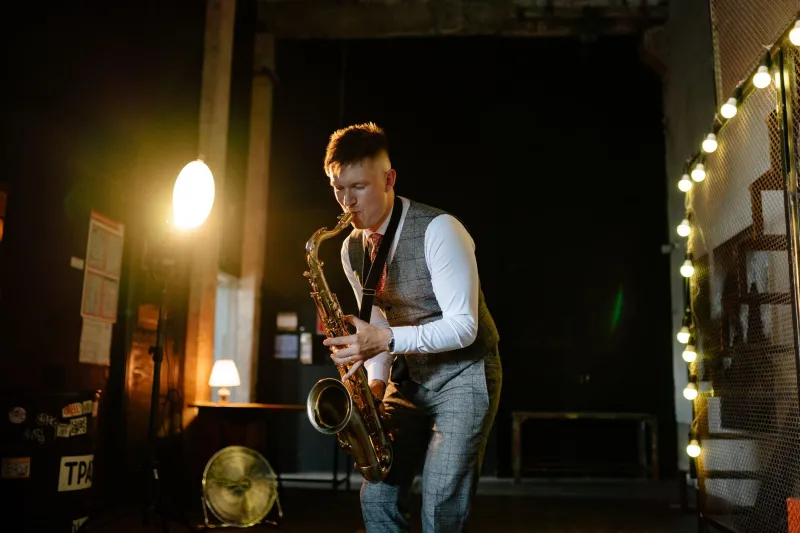
Even Heavy Weather (1977), the band's most commercially successful record and a work sometimes criticized for its accessibility, contains this quality. "A Remark You Made" is perhaps the purest example in the Weather Report catalog of silence deployed as melodic structure. Shorter's soprano saxophone moves through the composition with a kind of earned deliberateness, each phrase separated by rests that feel neither rushed nor perfunctory. The spaces breathe. They invite reflection. They make the notes that follow feel genuinely necessary rather than merely sequential.
Restraint as Contrast and Tension
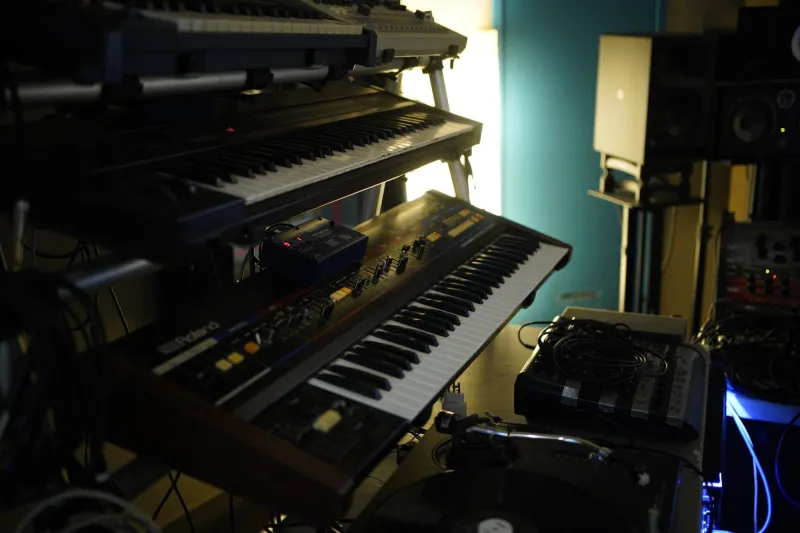
One of the more sophisticated aspects of Weather Report's approach is that their silences did not exist in isolation. They were effective precisely because the band was also capable of extraordinary density. Zawinul's synthesizer work could fill a sonic canvas with layered, orchestral complexity; Shorter's saxophone could erupt into extended, searching lines; the rhythm section, particularly during Alphonso Johnson's tenure on bass, could generate formidable momentum.
The restraint, then, was meaningful in part because the alternative was always audibly available. When Weather Report pulled back — when a track dissolved into a single sustained tone or a solitary melodic fragment — the listener felt the weight of everything the band was choosing not to play. That withheld energy created tension in a way that constant activity never could.
This is a lesson that many fusion bands of the era never absorbed. The assumption that more is more — that technical proficiency should be demonstrated through continuous deployment — produced recordings that were impressive in isolated moments but exhausting over the course of an album. Weather Report, by contrast, understood pacing as a compositional value. Their albums move through states of density and sparsity with a kind of structural logic that rewards patient, repeated listening.
Studio Discipline and the Architecture of Quietude
The band's studio practice reinforced these values. Zawinul was known for his meticulous approach to production, and his instincts ran consistently toward the purposeful rather than the incidental. Excess, in his view, was not a virtue. If a passage could be made more effective by subtraction, subtraction was the correct choice.
This discipline extended to the ensemble as a whole. Weather Report operated, particularly in their most celebrated periods, as a genuine collective — a band in which each member's contribution was weighed against the needs of the composition rather than the desires of individual ego. That collective orientation made it possible to sustain a culture of restraint. A musician willing to leave space is, in a sense, trusting the silence to carry part of the expressive load. That trust requires both confidence in the composition and a certain subordination of self.
Anecdotes from musicians who worked with or alongside the band during the 1970s consistently emphasize Zawinul's insistence on intentionality. Every sound had to justify its presence. The question was never simply whether something could be added, but whether it should be.
A Legacy Measured in What Was Left Out
The influence of Weather Report's approach to silence and restraint is difficult to quantify precisely because it operates as an absence. You cannot easily point to a specific passage in a contemporary recording and say: this is the Weather Report silence. But musicians who have studied the band's catalog with any seriousness tend to describe a shift in how they think about space — a growing awareness that the gaps between notes are not waiting rooms but active participants in the musical experience.
Producers working in jazz-adjacent genres, from contemporary chamber music to ambient electronic composition, have cited the band's structural economy as a formative reference. The idea that a recording can be powerful not despite its quietude but because of it — that restraint is a form of expressive ambition rather than a concession to it — is one of Weather Report's most consequential gifts to the broader musical conversation.
In an American music culture that has historically rewarded spectacle and abundance, Weather Report's commitment to the meaningful pause remains genuinely countercultural. They understood something that takes most musicians years to learn, if they learn it at all: that what you choose not to play is always part of the composition. The silence, carefully placed, speaks.